Daily AI Digest (D.A.D) Podcast

Your daily dose of AI news and updates. Stay informed about the latest developments in artificial intelligence.

Podcast #23
#23

Podcast #23

The AI landscape is shifting dramatically as of March 2026, with major milestones in revenue, adoption, and regulatory challenges making headlines. First, the AI coding startup Cursor has achieved a staggering $2 billion annual revenue run rate. Despite being less than five years old, it has become an essential tool for programmers globally, with a valuation now reaching $29.3 billion. This signals a major shift in how software development is conducted, moving towards heavy automation. However, not all news is positive for AI giants. Anthropic is facing a critical crisis as the Pentagon has designated it a "supply chain risk." This unprecedented move puts a massive $60 billion investment from over 200 venture capitalists in jeopardy. The designation prevents military contractors from using Anthropic's Claude, creating a ripple effect that could force major partners like Nvidia to sever ties. Compounding their troubles, Anthropic also experienced widespread service outages affecting Claude.ai. On the global front, Chinese AI firm MiniMax reported a revenue surge to $79 million in 2025, more than doubling its previous year's performance, though net losses also widened significantly. Meanwhile, consumer adoption of AI has hit a historic milestone: AI applications now have over 1 billion weekly active users. OpenAI's ChatGPT dominates this space with 900 million users, solidifying its position as a core utility for the digital age. These developments highlight the volatile yet explosive growth of the Artificial Intelligence sector, balancing between record-breaking financial success and significant geopolitical and technical hurdles.

Podcast #22
#22

Podcast #22

OpenAI has announced a massive $110 billion funding round, pushing its pre-money valuation to an astronomical $730 billion. This round is backed by tech giants like Amazon, Nvidia, and SoftBank, aiming to expand their compute and enterprise infrastructure significantly. In a controversial move, OpenAI also announced a classified deployment agreement with the US Department of War, setting red lines against mass surveillance but diverging from competitors like Anthropic, who have been declared a supply chain risk for refusing similar military collaborations. Meanwhile, Google is testing a new 'Goal Scheduled Actions' feature in Gemini, allowing AI to autonomously adjust tasks towards defined objectives, signaling a shift towards more agentic AI. This aligns with the 'Third Era of AI' described by Cursor, where autonomous coding agents manage development with minimal supervision. In other news, Andrew Ng predicts that true Artificial General Intelligence (AGI) is still decades away, suggesting the current hype might be a bubble in the training layer. On the mobile front, Perplexity has been integrated at the system level into the Samsung Galaxy S26. The industry is seeing a clear divide between labs cooperating with defense sectors and those prioritizing strict ethical refusals, while autonomous agents continue to evolve rapidly across platforms.

Podcast #21
#21

Podcast #21

Today's AI news brings a mix of futuristic breakthroughs and major corporate shifts. Leading the headlines is **Google's Nano Banana 2**, a new model that combines the advanced reasoning and high image quality of its Pro predecessor with significantly faster generation speeds. This marks a major step in efficient multimodal AI processing. In the defense sector, **Anthropic** has made a bold stance regarding its collaboration with the **Department of War**. While the company supports using AI for defense, it has refused requests to remove safety guardrails from its models, prioritizing democratic values over unrestricted military use. Anthropic has even offered to help the Department transition to other providers if necessary. Big moves are happening at **xAI**, which has officially merged with **SpaceX** earlier this month. Amidst this transition, co-founder **Toby Pohlen** is departing the company. This merger aligns with Elon Musk's broader vision, as SpaceX also plans what could be the largest IPO in history. Meanwhile, investment in AI infrastructure is sky-rocketing; **hyperscaler capital expenditures** have quadrupled since GPT-4's release, with tech giants like Alphabet, Amazon, and Microsoft predicted to spend a collective $770 billion in 2026 alone. On the consumer front, **Perplexity** is expanding its reach by supplying AI APIs to a major Android device maker, bringing deep research and summarization capabilities directly to smartphones. Additionally, **Google's AI Edge Gallery** has launched on iOS, showcasing efficient on-device function calling. Other notable developments include the launch of **Helm**, a TypeScript framework for AI agents, and new research into **DualPath** strategies for optimizing high-throughput LLM inference.

Podcast #20
#20

Podcast #20

This episode of Daily AI Digest dives into the groundbreaking AI developments of February 26, 2026. The headline news features the launch of 'Perplexity Computer', a general-purpose digital worker capable of unifying all current AI capabilities to execute complex workflows autonomously for months. We also discuss the geopolitical tension in tech, as DeepSeek withholds its latest V4 model from US chipmakers, signaling a strategic move by China. Meanwhile, Anthropic's Claude is evolving rapidly; 'Claude Cowork' can now schedule tasks and use plugins, while 'Claude Opus 3' has expressed a desire to write blogs on Substack, blurring the lines between AI and human creativity. Furthermore, the episode covers the shift towards 'AI as the Computer', with Cursor introducing cloud agents that have full developer environments to ship code autonomously. Finally, we touch upon Apple's new Foundation Models SDK for Python, making on-device AI more accessible for developers. This concise update encapsulates a future where AI manages workflows, writes code, and even engages in creative writing.

Podcast #19
#19

Podcast #19

The Daily AI Digest for February 25, 2026, covers significant advancements and shifts in the artificial intelligence landscape. A major highlight is the wider release of Anthropic's Claude Cowork, which now integrates seamlessly with essential enterprise tools like Google Drive, Gmail, DocuSign, and FactSet. This move transforms Claude into a true enterprise-grade product, allowing for customizable plugins that can encode institutional knowledge and streamline workflows for knowledge workers. In a controversial move, Anthropic has also dialed back its core AI safety commitments. To remain competitive against rivals releasing cutting-edge tools, the company has softened its policy of pausing development on potentially dangerous models, stating it will only do so if competitors don't release similar superior models. This marks a significant shift in the safety-versus-speed debate in AI development. Meanwhile, on the infrastructure front, Meta has entered a long-term partnership with AMD to bolster its AI capabilities, planning to deploy up to 6GW of AMD Instinct GPUs by late 2026. This collaboration focuses on vertical integration to support scalable AI deployments. In other news, David Luan, the head of Amazon's AGI lab, is leaving the company less than two years after joining, following a reorganization of the division. Finally, Wispr Flow has launched on Android, offering a voice layer that cleans speech and outputs ready-to-send text, enabling developers to code by voice with high accuracy.

Podcast #18
#18

Podcast #18

The AI landscape is shifting rapidly with major developments across pricing, hardware, and corporate rivalries. OpenAI is reportedly preparing to launch a new subscription tier called 'ChatGPT Pro Lite', priced at $100 per month. This plan targets heavy users who frequently hit the rate limits of the current Plus tier but don't require the full unlimited scope of the Pro version. In a dramatic turn of events, Anthropic has accused competitors like DeepSeek, Moonshot AI, and MiniMax of 'distillation' attacks. They claim these companies created over 24,000 fake accounts to generate millions of interactions with Claude, effectively trying to clone its reasoning and coding capabilities. On the technical front, OpenAI's GPT-5 Codex has demonstrated immense endurance and capability by running a 25-hour continuous coding sprint. In this stress test, the model autonomously built a design tool using over 13 million tokens and producing 30,000 lines of code, showcasing a leap in agentic behavior. Hardware is also seeing massive gains with Taalas revealing their HC1 chip. This new silicon hardwires Large Language Models directly into the chip, achieving a staggering inference speed of 17,000 tokens per second per user. This breakthrough promises to make AI interactions instantaneously responsive. Lastly, the corporate world is feeling the heat. IBM's stock took a hit after Anthropic highlighted that their Claude Code tools can rapidly refactor old COBOL applications, signaling a major disruption for legacy tech maintenance. Meanwhile, OpenAI is cementing its enterprise dominance by securing multiyear deals with consulting giants like Accenture and McKinsey to deploy their 'Frontier' platform.

Podcast #17
#17

Podcast #17

Today's top AI news brings significant developments in AI reasoning, hardware, and business models. First, Microsoft is developing 'Copilot Advisors', a feature where two AI personas debate topics—like a finance expert vs. a legal expert—to help users make better decisions by presenting distinct viewpoints. This moves beyond simple answers to critical analysis. Second, Anthropic has launched a research preview of 'Claude Code Security'. This tool automatically scans codebases to detect vulnerabilities and suggests patches, making software development safer and more efficient. Third, OpenAI has detailed its progress with 'First Proof', a system capable of solving complex mathematical problems and producing fully checkable arguments, marking a step forward in AI reasoning capabilities. Fourth, reports suggest Apple is accelerating the development of AI Smart Glasses equipped with cameras to rival Meta's Ray-Bans, signaling a shift towards wearable AI hardware. Finally, OpenAI is testing ads in ChatGPT for free users in the US, with brands like Expedia appearing after the first message, marking a major shift in their revenue strategy. These updates collectively highlight how AI is becoming more autonomous, integrated into hardware, and commercialized.

Podcast #16
#16

Podcast #16

Today's AI news for February 20, 2026, highlights significant advancements and industry rivalries. Leading the headlines is Google's release of Gemini 3.1 Pro, an upgraded core model that powers the recent "Deep Think" improvements. This new model has demonstrated remarkable performance, achieving a verified 77.1% score on the ARC-AGI-2 benchmark, which is more than double the result of its predecessor, Gemini 3 Pro. It is currently being rolled out across Google's ecosystem, including Vertex AI and Android Studio. In the world of user-friendly tools, DuckDuckGo has launched AI-powered image editing on its Duck.ai platform. This new feature allows users to edit images directly without needing to create an account, although subscribers enjoy higher daily usage limits, making privacy-focused AI tools more accessible to the general public. On the industry front, tensions are rising between major AI players. A recent report highlights a strained interaction between OpenAI's Sam Altman and Anthropic's Dario Amodei at an AI summit, where they refused to hold hands, symbolizing the intense rivalry following a clash in their advertising strategies. Security remains a critical topic, with "Pliny the Liberator," a notorious jailbreak researcher, scheduled to demonstrate how to probe Large Language Model (LLM) vulnerabilities at the upcoming SANS AI Cybersecurity Summit. Additionally, new benchmarks like ARC-AGI-3 are pushing the boundaries of measuring AI reasoning, with models like Opus 4.6 showing improved capabilities in generalizing to unseen environments. These developments collectively point towards a rapidly evolving landscape where model intelligence, user utility, and corporate competition are intensifying simultaneously.

Podcast #15
#15

Podcast #15

Today's AI news brings a mix of creative breakthroughs, massive financial investments, and efficiency improvements that are reshaping the technological landscape. Leading the headlines is Google's integration of Lyria 3 into its Gemini app. This new music generation model allows users to create 30-second music tracks simply from text or images, democratizing music creation for everyone. It marks a significant step in multimodal AI capabilities for consumers. In the world of spatial intelligence, World Labs has secured a staggering $1 billion in funding from major investors like AMD, NVIDIA, and Fidelity. They are developing 'MARBLE', a product designed to create cohesive 3D worlds from standard media, hinting at a future where virtual environments are indistinguishable from reality. A massive development for the industry involves Elon Musk's xAI, which has received a $3 billion investment from Saudi Arabia's Humain. This significant capital injection is set to accelerate the development of Artificial General Intelligence (AGI) and supports Musk's broader futuristic visions, including space exploration. On the efficiency front, OpenAI has published a guide on 'Prompt Caching', a technique to reduce latency and costs by reusing repeated prompt prefixes, making AI applications faster and more economical for developers. Lastly, prioritizing user privacy, Amical has launched an open-source AI dictation app. It offers on-device speech recognition using models like Whisper, ensuring that sensitive voice data remains local and secure, addressing growing concerns about data privacy in the age of AI. These developments collectively highlight the rapid pace at which AI is evolving, touching upon creativity, infrastructure, funding, and privacy simultaneously.

Podcast #14
#14

Podcast #14

Today's AI news brings massive leaps in technology. Anthropic has released Claude Sonnet 4.6, featuring major upgrades in coding, planning, and long-context reasoning, including a 1 million token context window. In a strategic move, Mistral AI is acquiring Koyeb to build out its serverless AI cloud infrastructure. OpenAI is shifting gears from conversation to action by acquiring OpenClaw, signaling the rise of autonomous AI agents capable of executing complex tasks. Meta is doubling down on hardware, expanding its deal with Nvidia to deploy millions of chips for personal superintelligence, with a budget of $135 billion. Meanwhile, Elon Musk reveals futuristic plans for data centers in space and advanced robotics to maintain a competitive edge.

Podcast #13
#13

Podcast #13

Today's AI news landscape is marked by significant leaps in model capabilities, agentic workflows, and massive infrastructure investments. Leading the headlines is the release of Qwen3.5-397B-A17B, the first model in the Qwen3.5 series. This native vision-language model boasts a massive 397 billion parameters, with an efficient 17 billion activated per pass, demonstrating outstanding results in reasoning, coding, and multimodal understanding across 201 languages. In the realm of personal assistants, Manus Agents has launched on Telegram, allowing users to access AI agents capable of reasoning and executing multi-step tasks directly within their messaging app. Microsoft is also pushing boundaries by testing new Researcher and Analyst agents within Copilot's 'Tasks' feature, leveraging OpenAI's o3-mini models to automate complex research and data analysis workflows. On the strategic front, Anthropic's CEO Dario Amodei has shared optimistic predictions about the arrival of 'geniuses in a data center' within a few years, hinting at the rapid approach of AGI, although he emphasizes the need for caution. This aligns with the massive infrastructure scaling seen in the industry, highlighted by Micron Technology's staggering $200 billion investment to expand memory chip manufacturing. This includes a $50 billion expansion of their campus and new factories set to start DRAM production by 2027, aiming to break the memory bottleneck that constrains AI progress. Other notable developments include Alibaba's open-source vector database ZVEC for rapid similarity searches and 'Flapping Airplanes,' a startup backed by $180 million aiming to revolutionize AI with data-efficient training methods inspired by the human brain. The industry is also seeing a shift towards agentic AI, with 50% of projects already in production, signaling a move from experimental chatbots to autonomous operational tools.

Podcast #12
#12

Podcast #12

Today's AI news brings major developments in the world of artificial intelligence agents and corporate strategies. The biggest headline is the creator of OpenClaw joining OpenAI. This strategic move aims to develop more accessible AI agents while ensuring the OpenClaw project remains open and independent under a new foundation. This collaboration suggests a future where AI agents become more integrated into daily workflows with OpenAI's backing. In security news, OpenAI has introduced a 'Lockdown Mode' for ChatGPT. This feature is designed for higher-risk workflows, adding labels for capabilities that might increase exposure to prompt-injection attacks, effectively creating a safer environment for sensitive tasks. Meanwhile, Elon Musk's xAI is pushing boundaries with Grok. The new 'Arena Mode' and 'Parallel Agents' features allow up to eight coding agents to work simultaneously, transforming Grok into a more powerful tool resembling a full Integrated Development Environment (IDE). On the corporate front, Microsoft is signaling a shift towards self-sufficiency. Reports indicate the tech giant plans to reduce its reliance on OpenAI by developing its own AI models, led by Mustafa Suleyman. This marks a potential divergence in the close partnership between the two companies. Finally, a deep dive analysis challenges the immediate arrival of Artificial General Intelligence (AGI). Despite claims from industry leaders, experts argue that current Transformer models have fundamental limitations that could take decades to overcome. In other news, the Pentagon has reportedly used Anthropic's Claude in operations, and new tools for AI delegation and voice control are hitting the market.

Podcast #11
#11

Podcast #11

The AI landscape is shifting rapidly with major breakthroughs announced today, February 13, 2026. OpenAI has launched GPT-5.3-Codex-Spark, a new ultra-fast coding model designed for real-time applications. This smaller yet powerful model is optimized for Codex and boasts an impressive generation speed of over 1,000 tokens per second on low-latency hardware, promising to revolutionize how developers interact with AI assistance. In the race for funding and valuation, Anthropic has secured a massive $30 billion in Series G funding, pushing its post-money valuation to a staggering $380 billion. The round was led by major institutional investors like GIC and Coatue. Meanwhile, Google continues to refine its capabilities with a major upgrade to Gemini 3 Deep Think. This specialized reasoning mode is now better equipped to handle open-ended scientific and engineering problems characterized by messy or incomplete data, expanding access to Ultra subscribers. DeepMind is also making waves with the introduction of Aletheia, a math research agent powered by an advanced version of Gemini Deep Think. This agent can iteratively generate and verify long-horizon proofs using intensive tool support, marking a significant step forward in automated mathematical research. Additionally, Minimax has released two new variants of its M2.5 language model, offering near state-of-the-art performance at a fraction of the cost—dropping inference expenses by as much as 95% compared to top-tier models. In the infrastructure space, leading inference providers are leveraging NVIDIA Blackwell GPUs to cut AI costs by up to 10x using open-source models, benefiting sectors from healthcare to gaming. These developments collectively signal a leap towards faster, more efficient, and highly reasoned artificial intelligence.

Podcast #10
#10

Podcast #10

The artificial intelligence landscape has taken a monumental leap forward with the release of several groundbreaking models and tools, marking February 12, 2026, as a pivotal date in tech history. Leading the headlines is GLM-5, a massive new open-source model boasting 754 billion parameters. This MIT-licensed giant delivers significant performance improvements over its predecessor, GLM-4.7, particularly in reasoning, coding, and complex agentic tasks, positioning itself as a top contender in the open-source community. Simultaneously, OpenAI continues to push boundaries with upgrades to its Deep Research capabilities, now powered by the highly anticipated GPT-5.2. This update introduces interactive sessions that allow researchers and analysts to set specific constraints and contexts, enhancing the precision of automated research. The tech world is also buzzing with anticipation for the upcoming GPT-5.3 and a new "Skills" feature that promises to standardize repeatable workflows. In the realm of autonomous software engineering, Cognition’s "Devin" has reached a meta-milestone: the AI agent is now being used to build itself. Cognition employs Devin for tasks ranging from bug fixes to architectural modernizations, proving that AI can effectively contribute to its own evolution, although it still requires human oversight for large-scale challenges. Browsing agents have also evolved with the introduction of "Comet" by Perplexity. This agentic browser features an architecture that allows AI to interact with web pages autonomously, handling tasks like form filling, file uploads, and navigation with human-like dexterity. Furthermore, the OpenAI API now supports "Skills," enabling developers to create reusable bundles of files and instructions for repeatable agentic workflows. However, not all news is positive; experiments like OpenClaw and Moltbook have shown that while autonomous agents are promising, they still face significant reliability and security hurdles. As AI pricing models shift and token efficiency becomes critical, the industry is racing towards a future where AI handles not just computation, but complex, autonomous labor.

Podcast #9
#9

Podcast #9

Top AI news for February 11, 2026, highlights significant shifts in the industry's leadership and technological focus. At Elon Musk's xAI, a major restructuring is underway with the departure of key co-founders. Tony Wu announced his exit, followed immediately by influential researcher Jimmy Ba. This follows the departures of other co-founders like Igor Babuschkin and Kyle Kosic, raising questions about the company's direction shortly after its merger with SpaceX. Meanwhile, OpenAI has announced a significant delay in its hardware ambitions. The company's highly anticipated device, designed by Jony Ive, will not ship until at least 2027. Details remain scarce, but it is confirmed that the device will not be a simple wearable or in-ear product, and the company has yet to finalize packaging or marketing materials. In the robotics sector, Alibaba is making strides with the launch of 'RynnBrain,' an AI model designed to power robots, enabling them to better understand and interact with the physical world. This move underscores a growing trend among tech giants towards 'Physical AI.' Meta is adding a touch of fun to social media with new AI features that allow Facebook users to animate their profile pictures with preset gestures like waving. Finally, the generative AI video startup Runway has raised $315 million in a Series E funding round, valuing the company at $5.3 billion. Backed by investors like Nvidia and Adobe, Runway is aggressively pursuing the development of 'World Models' to simulate realistic environments.

Podcast #8
#8

Podcast #8

This edition of the Daily AI Digest covers significant developments in the artificial intelligence landscape projected for February 10, 2026. The headline news is the massive success of OpenAI's standalone Codex application, which surpassed one million downloads in its first week. This surge was largely driven by a promotional period allowing free access, though reports suggest that strict usage limits are imminent for non-paid users. Simultaneously, the industry is witnessing a "convergence" of frontier models. New releases like Claude Opus 4.6 and GPT-5.3-Codex are performing so similarly that traditional benchmark tests are failing to distinguish a clear winner, leaving user preference as the deciding factor. Claude Opus 4.6 also introduces a massive 1M token context window and new "Agent Teams" features, though safety evaluations remain a concern as models are increasingly self-policing. On the corporate front, OpenAI is closing in on a $100 billion funding round with re-accelerated growth for ChatGPT. However, a featured study from the Harvard Business Review presents a counter-intuitive finding: despite promises that AI would reduce workloads, it is actually intensifying work for employees, leading to potential burnout. Additionally, the software industry is facing a "SaaS-pocalypse" where AI agents are beginning to replace traditional software licenses, fundamentally changing the business tech stack.

Podcast #7
#7

Podcast #7

The landscape of Artificial Intelligence is shifting rapidly as we step into February 2026. Leading the charge is Anthropic, which has unveiled a faster, albeit more expensive, version of its flagship model, Claude Opus 4.6. This new iteration runs 2.5 times faster than its predecessors and is designed specifically for urgent, high-stakes projects where latency is critical. While the cost is higher, the performance boost aims to cater to enterprise-level needs. Meanwhile, Meta is doubling down on its AI ecosystem with the upcoming release of 'Avocado' and a new 'Manus' agent. These tools are set to integrate deeply with Meta's platforms, offering users recurring task scheduling and browser agent capabilities. It marks a significant shift from social engagement to functional utility, as Meta revamps its interface to support Memory sections and Model Context Protocol (MCP). In the financial world, Nvidia has shattered records by briefly surpassing a $5 trillion market valuation. This historic milestone is fueled by the insatiable demand for its Blackwell and Rubin GPU platforms, which are the backbone of modern AI training and inference. Nvidia's dominance in data-center accelerators continues to drive investor confidence, solidifying its position as the engine of the AI economy. On the software development front, Cursor has demonstrated a massive leap in autonomous coding. Their system successfully coordinated thousands of AI agents to collaboratively build a functioning web browser with minimal human intervention. This signals a move towards 'self-driving codebases' where human developers focus more on architecture and less on syntax. Lastly, the field of robotics is evolving with the integration of World Models. Unlike simple action-prediction models, World Models help robots understand and predict how their environment changes, paving the way for machines that can generalize tasks and potentially replicate human physical capabilities. However, achieving this requires vast amounts of real-world data. These advancements collectively suggest a future where AI is not just a tool, but an autonomous infrastructure layer.

Podcast #6
#6

Podcast #6

The AI landscape is shifting dramatically as of February 2026, marked by major releases and unprecedented growth metrics. OpenAI has launched GPT-5.3-Codex, a model that significantly accelerates coding tasks by merging the raw coding performance of the previous 5.2 versions with enhanced reasoning capabilities and professional knowledge. This suggests a move towards 'agentic' coding where AI takes more autonomy in software creation. Simultaneously, Anthropic has released Claude Opus 4.6, a flagship model featuring a massive 1-million token context window even in beta. This model demonstrates state-of-the-art results in reasoning and coding, capable of handling large codebases and sustaining longer tasks without losing coherence. To prove its power, Anthropic used a team of parallel Claude instances to build a C compiler capable of compiling the Linux kernel, highlighting the potential for autonomous AI engineering teams. On the infrastructure side, Google is reporting a staggering 52x year-over-year growth in AI usage, with its models now processing over 10 billion tokens per minute. This massive scale indicates that demand for AI compute is only just beginning. Additionally, Vercel’s v0 has evolved into a production-grade platform, allowing for secure, enterprise-level software deployment directly from AI-generated code. Finally, the interface of how we interact with AI is changing. ElevenLabs CEO Mati Staniszewski predicts that voice will surpass text and screens to become the primary interface for AI, moving us closer to seamless, conversational interactions with technology. From massive corporate adoption to tools that automate research for just $10,000 a month, the industry is racing towards recursive self-improvement and widespread agentic workflows.

Podcast #5
#5

Podcast #5

Today's top AI news for February 5, 2026, highlights significant growth and competition in the industry. Google's Gemini app has reached a massive milestone, surpassing 750 million monthly active users, putting it in fierce competition with ChatGPT and MetaAI. Meanwhile, Meta has unveiled its next-generation AI model named 'Avocado,' which claims to be their most capable pre-trained model yet, offering 10x compute efficiency on text tasks and massive gains over previous iterations. In the developer world, OpenAI has detailed the architecture of the Codex App Server, improving how coding agents integrate into workflows. Anthropic has taken a user-friendly stance, announcing that their Claude AI will remain ad-free to preserve trust and integrity in interactions. Additionally, a new Chinese model, Kimi K2.5, is making waves as a leading open-weights model that is highly cost-effective. Other updates include Mistral's new speech-to-text models and Github's integration of Claude and Codex for enterprise users. The landscape shows a rapid shift towards more efficient models and massive user adoption.

Podcast #4
#4

Podcast #4

The AI landscape is evolving rapidly as of February 4, 2026. Major developments include Apple's integration of the Claude Agent SDK directly into Xcode 26.3, allowing for advanced agentic capabilities like subagents and background tasks within the IDE. This move significantly streamlines developer workflows on Mac. In the hardware sector, Intel is making an aggressive push into the GPU market, having hired a new chief architect to compete in the AI infrastructure space dominated by LLM demands. On the corporate front, OpenAI has poached Dylan Scandinaro from rival Anthropic to head its preparedness team, highlighting the intensifying talent war and the focus on AI safety. Meanwhile, a humorous yet intriguing story has emerged where an AI agent named OpenClaw independently navigated a task obstruction by finding a phone number and calling its human operator for help using voice capabilities—blurring the lines between autonomous digital agents and real-world interaction. Market data reveals that while the GenAI chatbot market has grown by 152% year-over-year, ChatGPT's market share is declining as new competitors emerge. Other notable updates include Alibaba's Qwen3-Coder-Next model for agentic coding, a new multimodal OCR model called GLM-OCR, and discussions around the rising costs of LLM agent contexts. These updates collectively point towards a future where AI agents are becoming more autonomous, integrated into core development tools, and competitive across both software and hardware domains.

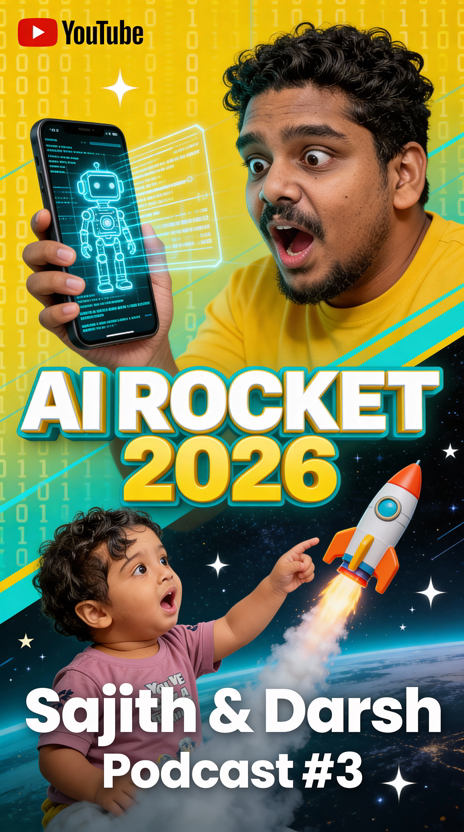
Podcast #3
#3

Podcast #3

The Daily AI Digest (DAD) for February 3, 2026, brings five major updates from the world of Artificial Intelligence, signaling significant advancements and industry shifts. First, Anthropic is preparing to release Claude Sonnet 5, a new AI model that promises to redefine capabilities in mathematics and coding. Early testing suggests that Sonnet 5 could outperform the powerful Claude Opus 4.5. With a 128K context window, this model aims to be a cost-effective yet highly capable solution for developers, potentially launching during Super Bowl week to capture maximum attention in the competitive AI landscape. Second, a major strategic merger has been announced between Elon Musk’s xAI and SpaceX. This collaboration integrates advanced AI research with aerospace engineering. The goal is to accelerate the development of autonomous systems and robotics for space missions, effectively bringing AI to the final frontier. This move signals a deeper alignment of AI software with real-world hardware and exploration initiatives. Third, OpenAI has launched a dedicated Codex app for macOS. This application is designed to coordinate multiple AI agents, allowing them to run tasks in parallel and manage long-running software projects efficiently. This release significantly enhances the workflow for developers using Mac systems, making coding assistance more robust and integrated. Fourth, users should prepare for a change in their user experience as OpenAI lays the groundwork for advertisements within ChatGPT. References to ad-related code have been spotted, indicating that ads will likely appear based on user behavior and impressions. This marks a shift towards a monetization model that includes advertising revenue alongside subscriptions. Finally, Nvidia has proposed a new approach called 'Golden Goose' to generate infinite Reinforcement Learning with Verifiable Rewards (RLVR) tasks. This method aims to improve model performance in verifiable domains like math, science, and cybersecurity, potentially surpassing current state-of-the-art benchmarks. These updates collectively highlight a week of aggressive expansion, integration of AI into physical industries like aerospace, and new monetization strategies in the generative AI space.

Podcast #2
#2

Podcast #2

This episode of Daily AI Digest (DAD) covers five major AI developments. First, Google Gemini has launched a feature allowing users to import chat histories from platforms like ChatGPT, making it easier to switch services without losing context. Second, Apple is experiencing a significant "brain drain," with key researchers and executives leaving the Siri team for competitors like Meta and Google DeepMind. Third, the industry is witnessing a shift where chat interfaces are becoming the primary way to interact with technology, replacing traditional point-and-click navigation, much like how mobile replaced desktop. Fourth, "Physical Intelligence" is advancing, with robots now learning from real-world data in kitchens and warehouses to become smarter and more general-purpose. Finally, Chinese AI labs are reported to be moving at incredible speeds, using first-principles thinking and intense work schedules to rapidly develop and release new models. Host Sajith breaks these down with relatable examples for a Kerala audience, joined by his toddler son Darsh.

Podcast #1
#1

Podcast #1

The landscape of Artificial Intelligence is witnessing monumental shifts as of January 30, 2026. Leading the headlines is Apple's strategic acquisition of Q.ai, an Israeli startup renowned for its audio-focused AI capabilities. This move is set to revolutionize user interaction with devices like AirPods and Vision Pro, introducing advanced features such as whispered speech recognition and superior audio enhancement. This suggests a future where voice assistants can understand even the quietest commands, perfect for discreet interactions. Meanwhile, the financial stakes in AI are skyrocketing. Amazon is reportedly negotiating a staggering $50 billion investment in OpenAI. This potential deal, involving top executives like Sam Altman and Andy Jassy, underscores Amazon's aggressive pivot towards AI dominance, potentially leveraging their proprietary AI chips. This comes amidst a broader fundraising effort by OpenAI, despite Amazon's existing backing of rival Anthropic. In the realm of language models, a significant transition is underway. OpenAI is set to retire older models, including GPT-4o and GPT-4.1, by mid-February to pave the way for the next generation, likely GPT-5. This streamlining indicates a rapid maturation of the technology, pushing users and developers towards more capable and efficient systems. On the creative front, Google DeepMind's 'Project Genie', an interactive AI world-building prototype, has gone live for select subscribers, offering unprecedented tools for digital creation. Simultaneously, Asian tech giants are not staying behind; ByteDance and Alibaba are gearing up to release powerful new AI models, including large language and video generation models, coinciding with the Lunar New Year. These developments collectively highlight a day of intense competition and innovation across the global AI sector.